

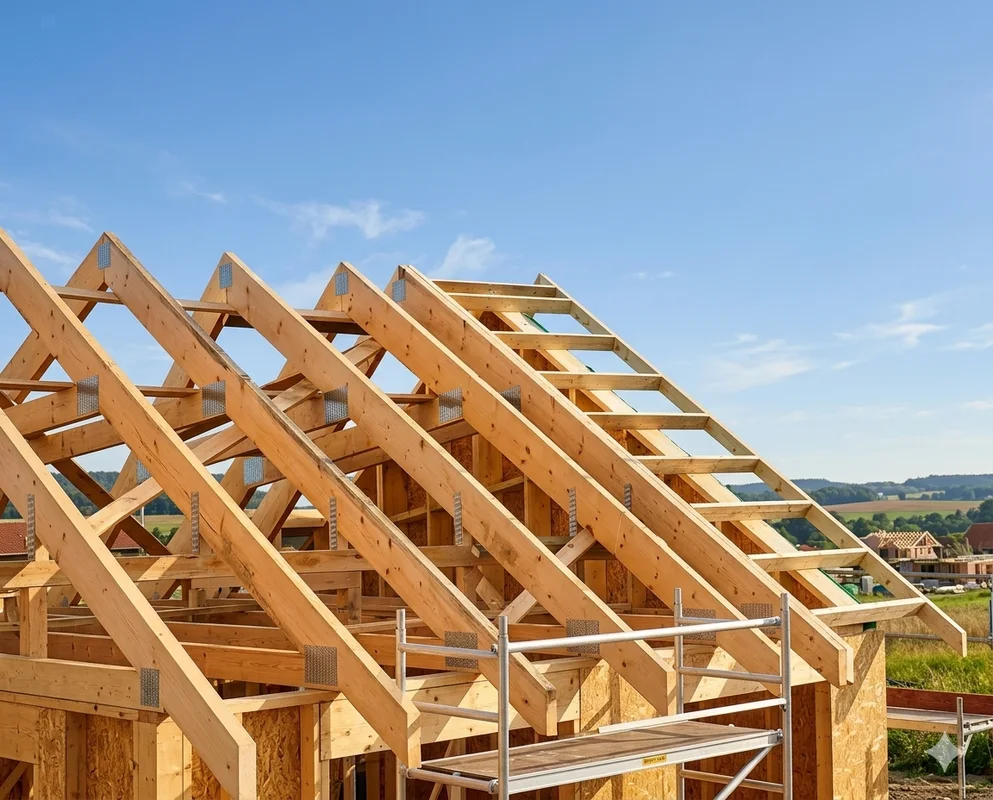
Structural detail
-
Millimetre-precise joints
-
Solid, glued or laminated timber — fir or pine
-
Standard fir wood, other species on request
-
Class III (colourless) or autoclave treatment
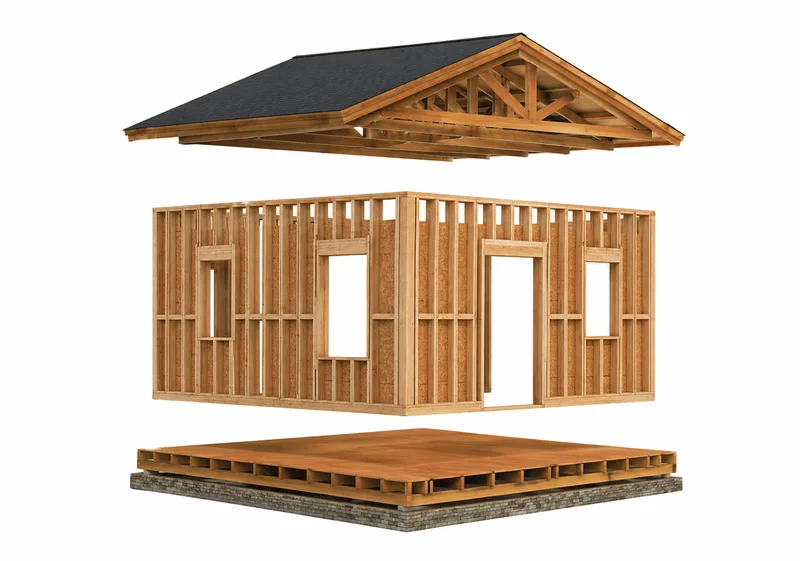
Vertical's prefabricated roofs
The roof is one of the most complex components of a timber structure — and the long-term durability of the whole building largely depends on it. At Vertical, we deliver prefabricated roofs as precise, ready-to-assemble kits, dimensioned exactly for your project.
We use glued laminated, solid or laminated timber, in carefully selected fir or pine, cut and assembled with high-precision machinery in our workshop in Transylvania. Each element is numbered, labelled and shipped with a detailed technical plan — so that the assembly crew can raise the truss within a few hours, without on-site adjustments.
Standard treatments include class III protection against insects and fungi, with an autoclave option for prolonged moisture exposure. Thanks to our attention to detail and the 10-year manufacturer warranty, choosing a Vertical prefabricated roof means a long-term investment with no surprises during assembly or in service.
Prefabricated roofing is becoming an increasingly popular choice for home builders and homeowners alike. In fact, manufactured roof trusses are now used in nearly four out of five of all new homes built in the United States.
There are many benefits to using a prefab roof, including cost savings, durability, and ease of installation. However, there are also some drawbacks to consider before making a decision.

What Is Prefabricated Roofing?
Prefabricated roofing is a type of roofing that is made in a factory setting and then shipped to the job site. The panels or trusses are then assembled on-site and the roof is installed. This type of roofing has been used for commercial buildings for many years, but it has only become popular for residential homes more recently.
Here are some of the pros and cons of prefabricated roofing to help you decide if it is the right choice for your home.
Advantages of Prefabricated Roofing
Labor Cost Savings
One of the biggest benefits of prefab roofing is cost savings. Compared to traditional roofing methods, prefabricated roofs are cheaper to install and often require less labor. This can save you a lot of money on your total project costs.
Design Options
By replacing traditional rafter and ceiling joist construction with prefabricated trusses, it is possible to construct complex roof and ceiling designs more efficiently and more quickly. Trusses can be designed for nearly any ceiling or roof combination required in modern custom homes.
Ease of Installation
Another advantage of prefabricated roofing is the ease of installation. Because the panels are made in a factory, they fit together more snugly and require less time to install. In addition, because the panels are lighter than traditional roofing materials, they are easier to handle and transport to the job site. This can make your project go smoother and faster overall.
Quality Control
Prefabricated roof construction also offers better quality control than traditional roofs. Prefab roof trusses are designed by engineers to meet the requirements of the specific roof and building codes. Because they are made in a controlled factory environment, the chances of errors or defects are much lower. Additionally, the materials used in prefab roofs are often stronger.
Durability
Prefabricated roofs are also very durable. They can withstand wind, rain, and snowstorms with ease and last for many years without requiring any maintenance.
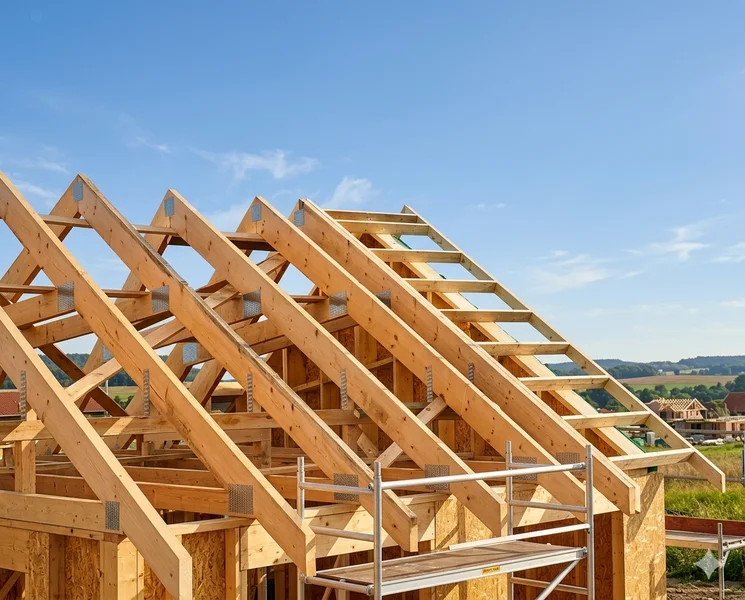
Why choose a kit solution
-
Complete, made-to-order, optimised solutions
-
Fast, easy assembly with the supplied technical plan
-
10-year manufacturer warranty
-
A hassle-free build site